
Business
EFCC grills Sterling Bank CEO, Abubakar Suleiman, over N20bn ‘Kogi fund’

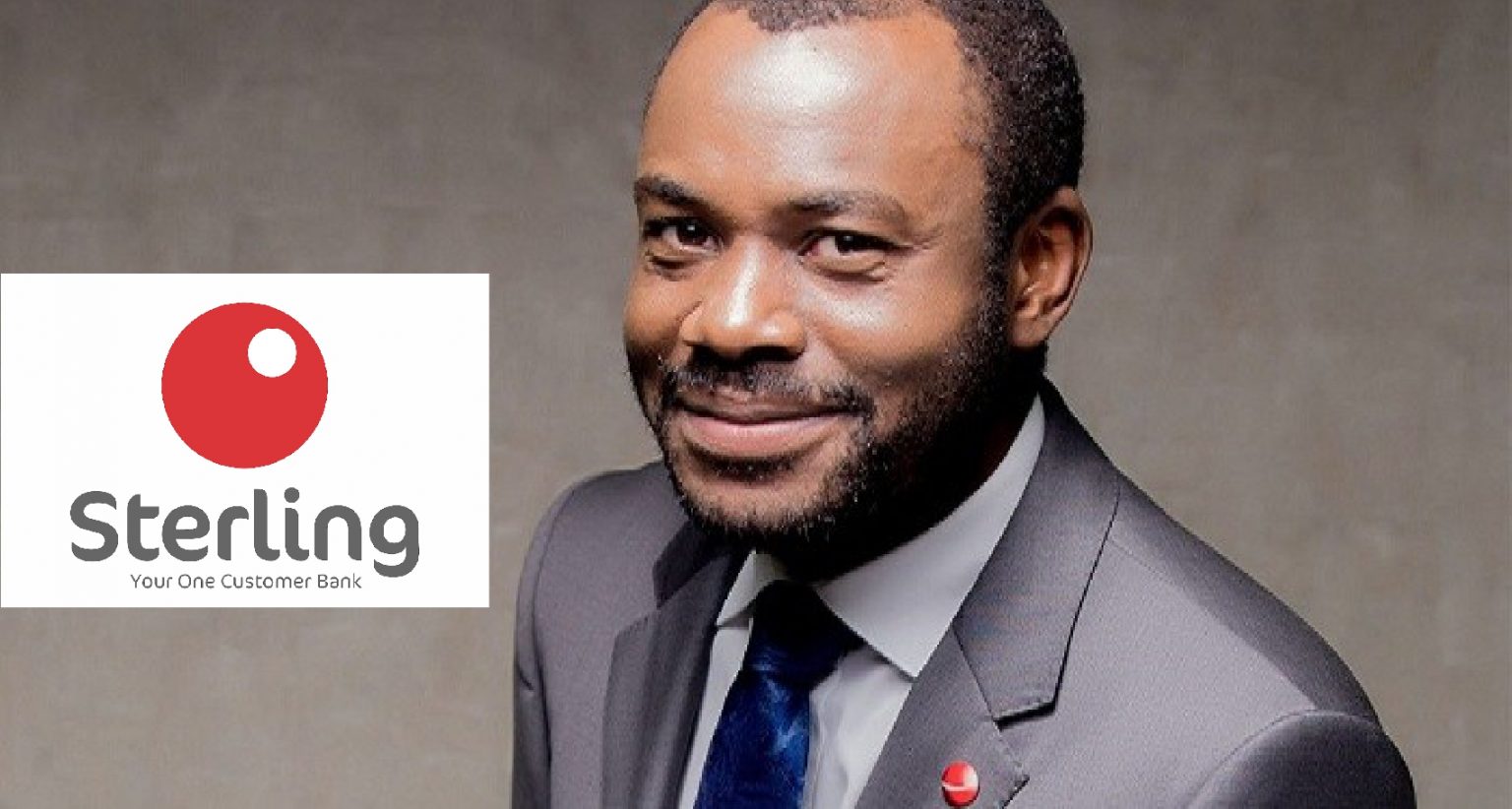
The Economic and Financial Crimes Commission, EFCC, has grilled Abubakar Suleiman, the chief executive officer of Sterling Bank Plc and two other top officials of the lender over the controversial ‘hidden’ N20 billion said to allegedly belong to the Kogi State government.
Recall it was reported that the federal anti-graft agency, in August 2021, said that it had credible intelligence that funds suspected to be proceeds of unlawful activities were in an account domiciled in Sterling Bank Plc with the name of Kogi State Salary Account and account No. 0073572696. The money was a bailout fund to the state meant to pay workers’ salaries but allegedly diverted to an interest-yielding account. The state government, however, vehemently denied the allegation. But the EFCC insisted the diverted money had been recovered and transferred to the Central Bank of Nigeria (CBN), a transaction reportedly acknowledged by the apex bank.
The EFCC had said that the apex bank in a letter referenced, DFD/DIR/CON/EXT/01/099 and dated November 9, 2021 informed the executive chairman of EFCC, Abdulrasheed Bawa, that it had received the money.
“We refer to your letter dated November 5, 2021 with Ref. No: CR:3000/EFCC/LS/CMU/REC-STE/VOL.4/047 on the above subject and wish to confirm the details of the receipt of the amount as stated below: Bank: Sterling Bank Plc; Amount: N19, 333, 333,333.36; Date of receipt: 04 November, 2021,” The commission had said.
Even though the money is in the CBN coffers, the Kogi State government has continued to insist that it neither authorised the opening nor operated the bank account, an assertion confirmed by Sterling Bank. “Let it be known that the Kogi government has disbursed its bailout loans for the purpose of which it was granted as at October 2019,” said Kogi State commissioner for Information and Communication, Kingsley Fanwo. “There is, therefore, no hidden bailout funds/loan belonging to Kogi that is capable of being returned to the CBN or frozen by order of court. The EFCC knows this, which is why it withdrew the suit it filed in court on the bailout fund.”
The Kogi State House of Assembly had also summoned the CEO of the bank to appear before it in person for clarification on the N20 billion bailout fund.
However, Sterling Bank had admitted that Kogi State Bailout Account exists in its record and “categorised under the account type ‘Intervention Fund,’” even though it was not opened by the state government or at its instance.
According to inside source, rising from this development, the EFCC invited and interrogated the Sterling Bank boss alongside two other officials of the bank for several hours to get the true picture of the circumstances around the said account. The bank’s MD and other officials were released after intense interrogation and they were to return anytime the EFCC needed them on the matter.
THE WITNESS however gathered that the bank’s CEO has made a useful statement to the commission while investigation is still on.
“The bank’s officials were grilled for several hours by the EFCC on the matter and going by their statements, heads may roll soon,” a source said.
Speaking further, the source divulged, “If the bank says the account was not opened and operated by the Kogi State government, then something is fishy and the bank must answer to it.”
“Who authorized the opening of the fixed deposit account and when? Who are/were/was the signatory to the account? How much had been withdrawn from the account since 2019? And who is keeping the N666.7 million which made up the balance of N20 billion initially said to be deposited into the bailout account? These are some of the questions the EFCC is trying to unravel.”
Both EFCC spokesperson, Wilson Uwujaren, and Sterling Bank were yet to respond to THE WITNESS inquiries as at press time.

Banking has evolved beyond the traditional branch experience, and FirstBank continues to make financial services more accessible through its seamless digital account opening platform. Whether you are a student opening your first account, a professional seeking a convenient banking solution, or an entrepreneur looking to manage business finances efficiently, you can now open a FirstBank account from the comfort of your home or office.
With just a smartphone, tablet, or computer and an internet connection, prospective customers can begin the account opening process in minutes through the FirstBank website. The platform is designed to be simple, secure, and user-friendly, ensuring a smooth onboarding experience for both individual and business customers. No paperwork, no need to physical visit a banking hall.
As Nigeria’s premier bank with 132 years of service excellence, FirstBank continues to leverage technology to enhance customer convenience and financial inclusion. The digital account opening solution reflects the bank’s commitment to delivering innovative banking services that meet customers where they are, enabling them to access banking services quickly and efficiently.
To open a FirstBank account, simply visit www.firstbanknigeria.com, complete the account opening process, and begin enjoying a wide range of banking products and services designed to help you achieve your financial goals.With FirstBank, banking is no longer limited by location. Open your account digitally today and experience convenient, secure, and accessible banking at your fingertips.
Business
ZENITH BANK DEEPENS INVESTMENT IN AFRICA’S TECHNOLOGY ECOSYSTEM, AWARDS ₦190 MILLION TO INNOVATORS

Zenith Bank Plc has awarded ₦190 million to 13 winners across three innovation competitions at the sixth edition of its flagship technology event, Zenith Bank Tech Fair 2026: Future Forward 6.0, reinforcing its commitment to nurturing innovation, accelerating digital advancement and empowering the next generation of African technology leaders.
Held virtually for the first time on Thursday, November 5, 2026, under the theme, “AI: Embrace or Extinct,” the event brought together technology leaders, entrepreneurs, innovators, policymakers and participants from across the world to explore the transformative potential of Artificial Intelligence (AI) and its implications for businesses, economies and society. The ₦190 million prize pool is the largest in the history of the Tech Fair, further demonstrating the Bank’s growing investment in technology and innovation.
The 2026 edition featured three competitions: the Hackathon, Startup Pitch Competition and the newly introduced Future Innovators Challenge. Together, they attracted over 3,000 submissions from developers, entrepreneurs and secondary school students seeking to showcase innovative solutions and secure funding to advance their ideas.
In the Hackathon category, Team Solo emerged overall winner, receiving ₦35 million, while 10x Brains secured second place with ₦20 million. Rumour Hunters came third with ₦15 million, while Òmìnira and Team Avera emerged fourth and fifth, receiving ₦10 million each.
In the Startup Pitch Competition, Cutstruct Technology Limited clinched first place with ₦35 million, followed by Sproutly, which received ₦20 million. PharmaRun secured third place with ₦15 million, while AUI BRAND and ProDevs completed the top five, receiving ₦10 million each.
The Future Innovators Challenge, introduced to encourage technology-driven creativity and problem-solving among secondary school students, produced three winners. Caleb British International School emerged first, receiving ₦5 million, while Queen of the Rosary College, Onitsha, came second with ₦3 million. Regina Pacis International School secured third place with ₦2 million.
Among the winning solutions, Cutstruct Technology Limited’s LiveVend platform is transforming construction procurement by connecting developers and contractors with suppliers. Sproutly uses financial technology to simplify school payments, while PharmaRun makes access to authentic medications more convenient through its network of pharmacies. Caleb British International School’s ReLearn platform, which won the Future Innovators Challenge, redistributes used textbooks to students in underserved communities, making learning materials more affordable and accessible.
Beyond the financial rewards, the winners will benefit from a six-week mentorship and incubation programme, providing expert guidance and practical support to refine their solutions, strengthen their business models and scale their innovations.
In his welcome remarks, the Founder of Zenith Bank Plc, Jim Ovia, CFR, reaffirmed his vision of empowering young people through technology and nurturing innovators capable of making a global impact. He said: “My vision is to continue empowering young people through technology, with the hope that one day we will produce individuals who make an impact on the scale of Bill Gates, Steve Jobs and Jeff Bezos.”
In her opening address, the Group Managing Director/Chief Executive Officer of Zenith Bank Plc, Dame Dr Adaora Umeoji, OON, highlighted the urgency of embracing Artificial Intelligence and adapting to the rapidly evolving technology landscape. She noted that the Bank’s commitment to innovation is reflected in its investments in digital infrastructure, products and services, including its Zenith Intelligent Virtual Assistant (ZIVA). She also highlighted the role of the Bank’s fintech subsidiary, FinoPay, in developing the SMART AfCFTA Portal to facilitate intra-African trade.
Speaking on Africa’s role in the global AI revolution, she declared: “The next generation of global AI champions can and should come from Africa.” She further challenged participants to embrace emerging technologies, stating: “Do not fear AI. Embrace it. Whether you are developing a solution for a farm, clinic, classroom or factory, dare to think big, build ethically and create scalable solutions.”
The Governor of Lagos State, His Excellency, Mr. Babajide Sanwo-Olu, commended Zenith Bank’s contribution to technological advancement, saying: “Over the years, Zenith Bank has been a strong driver and enabler of innovation, using technology to advance solutions and raise expectations for its employees, stakeholders and the wider business community.”
He also reaffirmed the Lagos State Government’s commitment to the technology ecosystem, stating: “We are also committed to supporting and promoting the technology ecosystem, creating opportunities for innovation and ensuring that Lagos remains at the forefront of this important area of development.”
The Honourable Minister of Innovation, Science and Technology, Dr Kingsley Tochukwu Udeh, SAN, represented by the Director-General of the National Space Research and Development Agency (NASRDA), Professor Matthew Adepoju, commended the Bank’s investment in technology and youth empowerment. He emphasised the importance of public-private collaboration in translating innovation into economic opportunities, stating: “When government and the private sector work in the same direction, ideas become products, products become businesses, and businesses create jobs for our people.”
The Tech Fair featured a distinguished line-up of technology leaders and industry experts, with Zach Kass, former Head of Go-to-Market at OpenAI, delivering the keynote address. Examining the evolution of AI and the emergence of autonomous agents, Kass challenged participants to consider the place of human judgement and values in an increasingly automated world. He said: “We are approaching a world in which we will have to ask ourselves, regularly and seriously: what do we want to keep human, and what are we willing to automate?”
Other speakers included Mike Ogbalu III, Managing Director/CEO of the Pan-African Payment and Settlement System (PAPSS); Deniz Oran, Head of Payment Partnerships at Google for EMEA; Jane Egerton-Idehen, Managing Director/CEO of Nigerian Communications Satellite Limited (NIGCOMSAT); Kashifu Inuwa Abdullahi, Director-General of the National Information Technology Development Agency (NITDA); and Chinwe Uzoho, Regional Managing Director, West Africa, Network International. Sessions were moderated by Victoria Rubadiri, CNN Correspondent, alongside other industry experts.
Conceived by the Bank’s Founder, Jim Ovia, CFR, the Zenith Tech Fair reflects his vision of empowering young Nigerians through technology and nurturing innovators capable of developing solutions with global relevance. Over the years, it has evolved into a platform connecting ideas, talent, investment and opportunities, while giving emerging technology businesses the resources and exposure to grow.
Previous winners have gone on to develop solutions with practical applications across different sectors. They include JumpnPass, which developed a self-checkout solution for retail; CreditChek, which uses AI and open banking to streamline credit verification; TrustLoop, winner of the 2025 Hackathon with its digital identity verification solution; and Cubbes Technologies Limited, winner of the 2025 Startup Pitch Competition with its AI-powered educational technology platform.
With the introduction of the Future Innovators Challenge, Zenith Bank is extending this support to secondary school students, recognising the importance of identifying and nurturing technology talent early. Through the Tech Fair and its broader technology-driven initiatives, the Bank continues to invest in the people, ideas and businesses shaping Africa’s digital economy, providing innovators with the funding, mentorship and opportunities to turn promising ideas into impactful solutions
From Nigeria’s first ATM gallery to the phone in your pocket, Zenith Bank continues its technology-led approach to making payments simpler and more secure.
Zenith Bank Plc has announced today that its customers can now pay with Google Pay, bringing greater convenience and security to everyday transactions. By adding an eligible Zenith Bank card to Google Wallet, customers can tap to pay at participating contactless payment terminals and check out online or in apps without repeatedly entering their card details.
As Nigerians increasingly rely on their phones to shop, pay bills and manage their finances, Zenith Bank continues to advance banking experiences that combine convenience with robust security.
A simpler, more secure way to pay
Google Pay uses payment tokenization, a technology that replaces a customer’s actual card number with a digital token. This helps protect sensitive payment information by reducing the need to share actual card details during transactions.
For Zenith Bank customers, this means:
- Enhanced security: Tokenization helps protect actual card details, reducing their exposure during payments.
- Faster checkout: Customers can tap their compatible phones at participating contactless terminals or pay online without repeatedly entering their card information.
- Convenience across channels: Eligible cards can be used through supported digital payment experiences, subject to device, merchant and service compatibility.
- Greater peace of mind: Built-in security features help customers make digital payments with greater confidence.
A legacy of innovation, a future of possibilities
Zenith Bank’s latest digital payment development builds on a history of using technology to improve customer experience.
In 2007, the Bank opened what it describes as Nigeria’s first ATM gallery, a full-fledged branch without human tellers that offered customers access to cash, including on weekends and public holidays. At a time when conventional banking often meant lengthy queues, the initiative provided an alternative built around convenience and accessibility.
Today, the same commitment to innovation continues to shape the Bank’s digital ambitions.
The Group Managing Director/CEO of Zenith Bank Plc, Dame Dr. Adaora Umeoji, OON, underscored the importance of the technology, describing it as “digitally forward.” She added that the upcoming Zenith Bank Tech Fair 2026, themed Future Forward 6.0 and scheduled for November 5, would take the conversation further.
How to get started
Eligible Zenith Bank cardholders can add their supported cards to Google Wallet on compatible devices by opening the app, selecting the option to add a payment card and completing the required verification process.
Once set up, customers can use Google Pay at participating contactless terminals and supported online or in-app checkout points. Availability is subject to card eligibility, device compatibility and merchant acceptance.
About Zenith Bank PlcZenith Bank Plc is a leading financial services institution committed to delivering innovative banking solutions, superior customer service and sustainable value to its stakeholders. Through continuous investment in technology, operational excellence and customer-centric innovation, the Bank continues to advance digital banking and support the evolving financial needs of individuals, businesses and communities.
-
 Politics2 years ago
BREAKING: Abiodun emerges chairman of Southern Governors Forum
-
 News2 years ago
NLC And TUC Reveals Reason Why Labour Accepted ₦70000 Minimum Wage
-
 Business6 years ago
NNPC records ₦20.36bn trading surplus in july.
-
 Business2 years ago
ZENITH BANK ASSURES SHAREHOLDERS OF QUANTUM LEAP IN FUTURE DIVIDENDS AT 34TH AGM, PAYS N195.67 BILLION FOR 2024 FINANCIAL YEAR
-
 Business6 years ago
GTBank reports PBT of ₦109.7bn in 2020 half year audited results
-
News2 years ago
Zenith Bank Enhances Customer Online Experience with Revamped Digital Channels
-
 News2 years ago
FIRSTBANK FILES APPEAL
-
 News2 years ago
‘No Disparity,’ NUPRC Confirmed 1.8m bopd NNPC Ltd Oil Production Figures At NAPE Conference’