
Business
FirstBank: 130 Years of Enabling Success

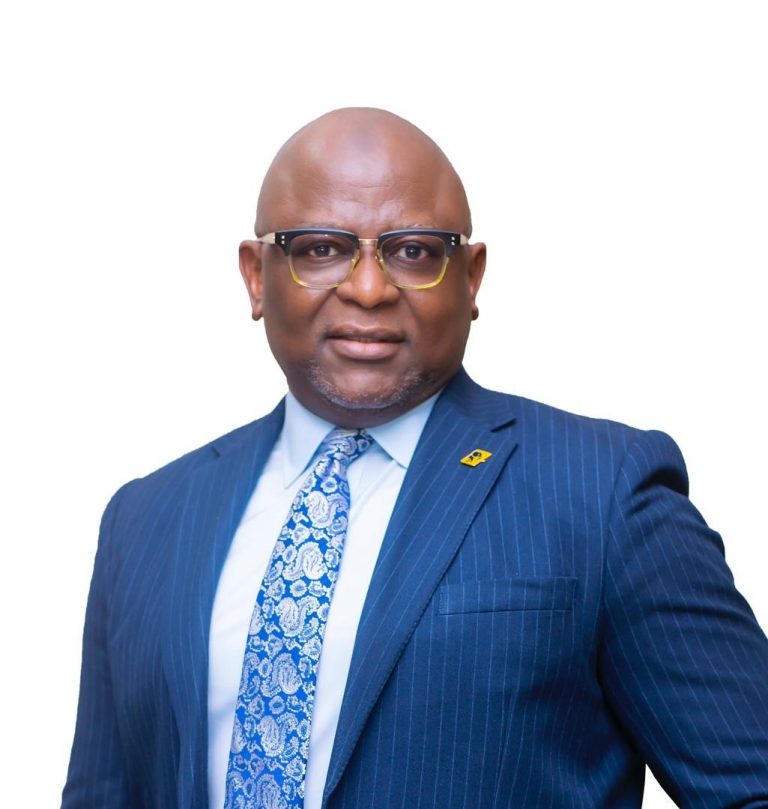
In a country with short-lived corporate excellence and a handful of centenary companies, hitting 130 years is undoubtedly a significant milestone for Nigeria’s premier financial institution, FirstBank. GEOFF IYATSE writes.
Experience, they say, comes with age. Nothing else aptly defines the consistent growth of First Bank of Nigeria Limited (FirstBank) and its consistent reinvention as the conscience of corporate Nigeria in the face of rising competition from traditional and other shadow banking brands.
Not many living Nigerians can list a single other existing Nigerian company founded in 1894, long before modern Nigeria was created. But FirstBank has not only survived the long 13 decades during which it etched itself into the socio-economic fabric of the country and created a niche as Nigeria’s banker, but it has also pushed itself into the frontier of financial technology evolution, making an inroad into the consciousness of tech-savvy Nigerian youths and the upwardly mobile banking public.
For an organisation that has stuck to Nigeria through thick and thin and enjoyed the monopoly of banking the country from the cradle, long before Africa tasted the beauty of financial system evolution, FirstBank could have been a dinosaur. That would have been easy. But it has chosen the tougher option; challenging traditions, breaking new ground, and constantly refreshing its operational template to stay ahead of the curve.
Established in 1894 as British Bank of West Africa (BBWA) by the late Sir Alfred Lewis Jones, a shipping magnate, FirstBank has been at the forefront of Nigeria’s economic growth and development through its superior banking services and social investments across sectors – manufacturing, small and medium scale enterprise (SMEs), agriculture, oil and gas and just about every other sector that has contributed to the country’s economic discovery.
The history of FirstBank is the history of Nigeria. At some point in its history, it even served as Nigeria’s Central Bank. Today, as the undisputed leader of the country’s brick-and-mortar banking, its nearly 800 business locations across the country give it robust presence in every local government across the nation.
Of course, in an era of ‘click’ banking, no financial institution is assessed by the strength of its physical banking network alone. Interestingly, the premier institution understands this logic, hence it has emerged as a force in continuously investing in cutting-edge financial technologies. For one, FirstMobile, its digital banking application, has also become a household name in the financial technology ecosystem. In 2015, when the platform was still at its infancy stage, its user base was about 60,000, a number that has soared to over six million (a growth of over 10,000%) as of last year. That has contributed immensely to its changed perception from traditional bank to innovative digital bank. Today, about 85 per cent of its transactions are initiated via digital platforms, according to insights provided by the bank in its public statements.
FirstMobile appears to have hit the bull’s eye in the bank’s reinvention drive and efforts to appeal to younger demographics. But the platform itself is only one of the potpourri of telecommunications-driven initiatives it has taken on to get young depositors on board. FirstOnline users have also grown from about 90,000 to over one million in less than a decade just as its USSD banking, which targets feature phone users, is even more successful with users increasing by close to 3,000 per cent in the last eight years, to about 15 million.
Last year alone, its Firstmonie Agent banking services processed over ₦1.1 trillion in transactions, more than double the amount handled by seven other big banks. Some of its strategic investments in technology include the development of its smart and interactive transaction banking platform known as FirstDirect2.0 and the introduction of the humanoid robot to the banking ecosystem in the country. The smart banking initiatives have been complemented by its Digital Xperience Centres (DXC) which are currently located in Lagos, Ibadan, and Abuja with plans to open more across the nation.
Overall, its digital banking has evolved in both volume and public perception even with artificial intelligence-driven commercials complementing its digital imprints. Ease, convenience and reliability created in recent years have moved the customer base from 0.6 million in 2015 to well over 42 million customer accounts as of 2023. This number, according to the Chief Executive Officer of FirstBank Group, Dr Adesola Adeduntan, during an interview with The Guardian last year, would double in no distant future as the organisation migrates aggressively to transaction-led banking. In September 2023 the bank’s non-interest income hit ₦293.0 billion, up 111.6% in comparison to September 2022 at ₦138.5 billion validating the bank’s commitment to a transaction-based era.
In addition, the number of users on the Bank’s digital channels has grown from about 600,000 users in 2015 to over 23.2 million users in 2023.
On the back of the extensive technology infrastructure overhaul FirstBank embarked on under Adeduntan’s leadership, its digital banking channels have become the most dominant delivery channel with the percentage of customer-induced transactions processed via digital channels increased from about 20% to over 90%. FirstBank has equally been consistent in its profitability. Its Group profit before tax (PBT) has climbed steadily from 10Billion naira in 2015 to 362.24Billion naira in 2023.
For an organisation that has not only created Nigeria’s banking industry but also dynamically shaped it, there is no reason the brand would not attract the best professionals. It attracted a blend of top Nigerian bankers and became the training ground for young professionals who have contributed to its rich history of corporate leadership. Despite this, Adeduntan who assumed office with a touch of dynamism, clearly understood the meeting point between institutional legacy and modern ‘click’ banking. In close to a decade since he first took over the reins at the Bank, he has brought this to bear, rejuvenating the rich corporate culture of the bank, competing actively in the youth space in both employment and business.
Nigerian banks have grown to become international brands, competing for businesses across Africa, (which they have dominated), Europe, Asia, and other Continents. With its United Kingdom subsidiary (which has a representative office in Paris, France) celebrating its 40th anniversary in 2022, FirstBank has led the revolution. Other subsidiaries of Nigeria’s premier financial inclusion services provider include FirstBank in the Democratic Republic of Congo, Guinea, Sierra Leone, and The Gambia; FBNBank in Ghana and Senegal as well as a Representative Office in Beijing, China.
Indeed, local banks have done well in recent years in opening offshore operations except that most of them are cost-centres, hence the promoters are often accused of ego-seeking and extroversion. And it is true because most of the subsidiaries’ operations have created a gaping hole in the bottom lines of the consolidated accounts of many of the institutions. But FirstBank turned the tide. In 2022, its overseas operations contributed a combined 21.3 per cent to the group’s pre-tax profit. Adeduntan has repositioned the financial institution from purely a Nigerian company to a multinational brand with African focus but a Nigerian nucleus.
Beyond its name, it has recorded several firsts in the industry it single-handedly created. Some firsts include – the first to be listed on the stock exchange, the first – amongst the existing banks – to adopt the use of ATM and the first Nigerian bank – and second in Africa – to reach the 10 million ATM cards-issued milestone. In addition, FirstBank is leading in AI and robotics with regards to the deployment of Humanoid Robots, in the financial services space in Nigeria. The robots are equipped with Video Banking and Artificial Intelligence (AI), taking on the role of friendly branch staff. The financial institution is the first to foray into arts, food, music, and other lifestyle sponsorships as part of the brand value proposition for clients of all ages.
Speaking on the resilience of the bank at a recent function Adeduntan disclosed what he called the bank’s secret of success: “At FirstBank, our purpose is to enable success, putting our customers and stakeholders at the heart of our business.
“For the years of our existence, we have focused on providing excellent financial services to meet the needs of our esteemed customers. We continue to improve on our products and create new ones that suit their specific needs. The reason why we have been successful is our ability to invent and reinvent ourselves. You can only be successful like that when you make your customer the centrepoint of all your actions. That is the secret of our success.”
The bank has demonstrated it is a responsible corporate citizen, playing a catalytic role in the economic and social development of the country. FirstBank’s sustainability/ESG focus, and commitments are in three key areas: Responsible Lending, Procurement & Climate Performance; Financial Inclusion & Diversity; as well as Education, Health, and Welfare.
Customers of the financial institution remain a vital element of its business. So, the bank constantly seeks responsible ways to provide lending and investment products and services that meet the customers’ needs, while ensuring that it manages the environmental social and governance (ESG) impacts in the process thus contributing to and promoting overall sustainable growth and development. About N5 Trillion worth of transactions were screened for ESG risks in 2023.
The bank has shown its commitment to playing a key role in the transition to a global net-zero economy by decarbonising its operations and value chains, driving climate finance, and promoting climate thought-leadership. For example, its partnership with Nigeria Conservation Foundation has seen the financial giant begin 50,000 trees planting with this year 2024 set as target year for this audacious goal.
FirstBank’s community development initiatives are anchored on its strategic Education, Health, and Welfare pillars. In 2023 alone, FirstBank executed various projects under the Start Performing Acts of Random Kindness (SPARK) initiative with growing impacts across 8 countries, including 60 beneficiary schools with over 150,000 secondary school students, and 30,000 underprivileged people and widows; over N100,000,000 (one hundred million naira) donations covering books and infrastructure for students, food items and clothing for the underprivileged, provision of capital for small and micro businesses.
Its FutureFirst programme in partnership with Junior Achievers Nigeria (JAN) has impacted over 1,000,000 (one million) people across the regions of the country including Lagos, Port Harcourt, and Abuja with the knowledge of financial literacy and entrepreneurship. It has also strategically driven partnerships with over 100 Charities/NGOs including LEAP Africa; International Women Society; UNGC; UN Women; Junior Achievement Nigeria.
Following the COVID-19 lockdown, FirstBank stepped in to donate cash (over 1 billion naira) and food to support the government in the fight against the pandemic. It also provided an innovative e-Learning initiative enabling the education of one million Nigerian students to drive sustainable efforts towards improving education for all. In partnership with the Lagos State Employment Trust Fund (LSETF), it launched a N5 billion LSETF-First Edu Loan scheme to cushion the impact of the COVID-19 pandemic on low-cost private schools in Lagos State.
For 30 years, FirstBank has remained a sponsor of the annual Nigerian Economic Summit, organised by the Nigerian Economic Summit Group, a think tank group with a mandate to promote and champion the transformation of the Nigerian economy into a private sector-led economy.
It is known for other sponsorships including, the Kaduna Georgian Cup Polo Tournament, now in its 103rd year, which is perhaps the longest-standing sports sponsorship in the world. FirstBank is also a long-standing sponsor of the Lagos Amateur Open Golf Championship at the Ikoyi Club, a property it has faithfully sponsored for 62 years.
The bank has played a crucial role in empowering entrepreneurs, women, students and the rapidly growing creative industries locally, which are gaining global recognition. Its strategic interventions through DecemberIssaVybe, FirstGem, SPARK, FirstBank Women Network and numerous other campaigns have been impactful, especially in addressing some key United Nations Sustainable Development Goals (SDGs).
FirstBank has demonstrated its commitment to Diversity through policies, partnerships, and initiatives, such as its employees’ ratio of female to male (39 per cent :61 percent); and 32 percent women in management, and 11 women on the Board of Directors across the FirstBank Group as well as various initiatives aimed at addressing the gender gap and increasing participation of women at all levels within the organisation.
In addition, the Bank’s membership of the UN Women is an affirmation of a deliberate policy that is consistent with UN Women’s Women Empowerment Principles – Equal Opportunity, Inclusion, and Non-discrimination.
And there have been rewards via awards for its leadership and life-changing initiatives. The recent ones include Best Corporate Bank at the recent Euromoney Awards for Excellence, Nigeria 2023; Best Corporate Bank Western Africa 2023, by Global Banking and Finance; Best Internet Banking in Nigeria 2023, by International Business Awards; Most Innovative Banking Brand in Nigeria, by Global Brands Awards; the Financial Institution of the Year 2023, by Afreximbank Pan-African Business and Development; Best CSR Bank Western Africa 2023 by Global Banking and Finance Magazine; Market Leader Nigeria in ESG – Euromoney Market Leaders 2022. For six consecutive years (2011 – 2016), FirstBank was named ‘Most Valuable Bank Brand in Nigeria’ by The Banker Magazine of the Financial Times Group and ‘the Best Retail Bank in Nigeria’ from 2011 to 2018, an award of the Asian Banker International Excellence in Retail Financial Services Awards.
At the heart of FirstBank’s success story – which includes enabling the success stories of its customers and other stakeholders – lies its ability to continuously reinvent itself. And the reinvention seems to have started in earnest. For instance, its stock soared recently, pushing the Group into the exclusive club of stocks with over one trillion (SWOOT) capitalisation. A few months after the remarkable feat, it went, shoving other lenders aside to reclaim the most capitalised banking stock on the stock exchange.
It has been 13 decades of rising and growing with Nigeria. But FirstBank is obviously not slowing down in its journey with the country its operation pre-dated.
Culled from The Guardian

Banking has evolved beyond the traditional branch experience, and FirstBank continues to make financial services more accessible through its seamless digital account opening platform. Whether you are a student opening your first account, a professional seeking a convenient banking solution, or an entrepreneur looking to manage business finances efficiently, you can now open a FirstBank account from the comfort of your home or office.
With just a smartphone, tablet, or computer and an internet connection, prospective customers can begin the account opening process in minutes through the FirstBank website. The platform is designed to be simple, secure, and user-friendly, ensuring a smooth onboarding experience for both individual and business customers. No paperwork, no need to physical visit a banking hall.
As Nigeria’s premier bank with 132 years of service excellence, FirstBank continues to leverage technology to enhance customer convenience and financial inclusion. The digital account opening solution reflects the bank’s commitment to delivering innovative banking services that meet customers where they are, enabling them to access banking services quickly and efficiently.
To open a FirstBank account, simply visit www.firstbanknigeria.com, complete the account opening process, and begin enjoying a wide range of banking products and services designed to help you achieve your financial goals.With FirstBank, banking is no longer limited by location. Open your account digitally today and experience convenient, secure, and accessible banking at your fingertips.
Business
ZENITH BANK DEEPENS INVESTMENT IN AFRICA’S TECHNOLOGY ECOSYSTEM, AWARDS ₦190 MILLION TO INNOVATORS

Zenith Bank Plc has awarded ₦190 million to 13 winners across three innovation competitions at the sixth edition of its flagship technology event, Zenith Bank Tech Fair 2026: Future Forward 6.0, reinforcing its commitment to nurturing innovation, accelerating digital advancement and empowering the next generation of African technology leaders.
Held virtually for the first time on Thursday, November 5, 2026, under the theme, “AI: Embrace or Extinct,” the event brought together technology leaders, entrepreneurs, innovators, policymakers and participants from across the world to explore the transformative potential of Artificial Intelligence (AI) and its implications for businesses, economies and society. The ₦190 million prize pool is the largest in the history of the Tech Fair, further demonstrating the Bank’s growing investment in technology and innovation.
The 2026 edition featured three competitions: the Hackathon, Startup Pitch Competition and the newly introduced Future Innovators Challenge. Together, they attracted over 3,000 submissions from developers, entrepreneurs and secondary school students seeking to showcase innovative solutions and secure funding to advance their ideas.
In the Hackathon category, Team Solo emerged overall winner, receiving ₦35 million, while 10x Brains secured second place with ₦20 million. Rumour Hunters came third with ₦15 million, while Òmìnira and Team Avera emerged fourth and fifth, receiving ₦10 million each.
In the Startup Pitch Competition, Cutstruct Technology Limited clinched first place with ₦35 million, followed by Sproutly, which received ₦20 million. PharmaRun secured third place with ₦15 million, while AUI BRAND and ProDevs completed the top five, receiving ₦10 million each.
The Future Innovators Challenge, introduced to encourage technology-driven creativity and problem-solving among secondary school students, produced three winners. Caleb British International School emerged first, receiving ₦5 million, while Queen of the Rosary College, Onitsha, came second with ₦3 million. Regina Pacis International School secured third place with ₦2 million.
Among the winning solutions, Cutstruct Technology Limited’s LiveVend platform is transforming construction procurement by connecting developers and contractors with suppliers. Sproutly uses financial technology to simplify school payments, while PharmaRun makes access to authentic medications more convenient through its network of pharmacies. Caleb British International School’s ReLearn platform, which won the Future Innovators Challenge, redistributes used textbooks to students in underserved communities, making learning materials more affordable and accessible.
Beyond the financial rewards, the winners will benefit from a six-week mentorship and incubation programme, providing expert guidance and practical support to refine their solutions, strengthen their business models and scale their innovations.
In his welcome remarks, the Founder of Zenith Bank Plc, Jim Ovia, CFR, reaffirmed his vision of empowering young people through technology and nurturing innovators capable of making a global impact. He said: “My vision is to continue empowering young people through technology, with the hope that one day we will produce individuals who make an impact on the scale of Bill Gates, Steve Jobs and Jeff Bezos.”
In her opening address, the Group Managing Director/Chief Executive Officer of Zenith Bank Plc, Dame Dr Adaora Umeoji, OON, highlighted the urgency of embracing Artificial Intelligence and adapting to the rapidly evolving technology landscape. She noted that the Bank’s commitment to innovation is reflected in its investments in digital infrastructure, products and services, including its Zenith Intelligent Virtual Assistant (ZIVA). She also highlighted the role of the Bank’s fintech subsidiary, FinoPay, in developing the SMART AfCFTA Portal to facilitate intra-African trade.
Speaking on Africa’s role in the global AI revolution, she declared: “The next generation of global AI champions can and should come from Africa.” She further challenged participants to embrace emerging technologies, stating: “Do not fear AI. Embrace it. Whether you are developing a solution for a farm, clinic, classroom or factory, dare to think big, build ethically and create scalable solutions.”
The Governor of Lagos State, His Excellency, Mr. Babajide Sanwo-Olu, commended Zenith Bank’s contribution to technological advancement, saying: “Over the years, Zenith Bank has been a strong driver and enabler of innovation, using technology to advance solutions and raise expectations for its employees, stakeholders and the wider business community.”
He also reaffirmed the Lagos State Government’s commitment to the technology ecosystem, stating: “We are also committed to supporting and promoting the technology ecosystem, creating opportunities for innovation and ensuring that Lagos remains at the forefront of this important area of development.”
The Honourable Minister of Innovation, Science and Technology, Dr Kingsley Tochukwu Udeh, SAN, represented by the Director-General of the National Space Research and Development Agency (NASRDA), Professor Matthew Adepoju, commended the Bank’s investment in technology and youth empowerment. He emphasised the importance of public-private collaboration in translating innovation into economic opportunities, stating: “When government and the private sector work in the same direction, ideas become products, products become businesses, and businesses create jobs for our people.”
The Tech Fair featured a distinguished line-up of technology leaders and industry experts, with Zach Kass, former Head of Go-to-Market at OpenAI, delivering the keynote address. Examining the evolution of AI and the emergence of autonomous agents, Kass challenged participants to consider the place of human judgement and values in an increasingly automated world. He said: “We are approaching a world in which we will have to ask ourselves, regularly and seriously: what do we want to keep human, and what are we willing to automate?”
Other speakers included Mike Ogbalu III, Managing Director/CEO of the Pan-African Payment and Settlement System (PAPSS); Deniz Oran, Head of Payment Partnerships at Google for EMEA; Jane Egerton-Idehen, Managing Director/CEO of Nigerian Communications Satellite Limited (NIGCOMSAT); Kashifu Inuwa Abdullahi, Director-General of the National Information Technology Development Agency (NITDA); and Chinwe Uzoho, Regional Managing Director, West Africa, Network International. Sessions were moderated by Victoria Rubadiri, CNN Correspondent, alongside other industry experts.
Conceived by the Bank’s Founder, Jim Ovia, CFR, the Zenith Tech Fair reflects his vision of empowering young Nigerians through technology and nurturing innovators capable of developing solutions with global relevance. Over the years, it has evolved into a platform connecting ideas, talent, investment and opportunities, while giving emerging technology businesses the resources and exposure to grow.
Previous winners have gone on to develop solutions with practical applications across different sectors. They include JumpnPass, which developed a self-checkout solution for retail; CreditChek, which uses AI and open banking to streamline credit verification; TrustLoop, winner of the 2025 Hackathon with its digital identity verification solution; and Cubbes Technologies Limited, winner of the 2025 Startup Pitch Competition with its AI-powered educational technology platform.
With the introduction of the Future Innovators Challenge, Zenith Bank is extending this support to secondary school students, recognising the importance of identifying and nurturing technology talent early. Through the Tech Fair and its broader technology-driven initiatives, the Bank continues to invest in the people, ideas and businesses shaping Africa’s digital economy, providing innovators with the funding, mentorship and opportunities to turn promising ideas into impactful solutions
From Nigeria’s first ATM gallery to the phone in your pocket, Zenith Bank continues its technology-led approach to making payments simpler and more secure.
Zenith Bank Plc has announced today that its customers can now pay with Google Pay, bringing greater convenience and security to everyday transactions. By adding an eligible Zenith Bank card to Google Wallet, customers can tap to pay at participating contactless payment terminals and check out online or in apps without repeatedly entering their card details.
As Nigerians increasingly rely on their phones to shop, pay bills and manage their finances, Zenith Bank continues to advance banking experiences that combine convenience with robust security.
A simpler, more secure way to pay
Google Pay uses payment tokenization, a technology that replaces a customer’s actual card number with a digital token. This helps protect sensitive payment information by reducing the need to share actual card details during transactions.
For Zenith Bank customers, this means:
- Enhanced security: Tokenization helps protect actual card details, reducing their exposure during payments.
- Faster checkout: Customers can tap their compatible phones at participating contactless terminals or pay online without repeatedly entering their card information.
- Convenience across channels: Eligible cards can be used through supported digital payment experiences, subject to device, merchant and service compatibility.
- Greater peace of mind: Built-in security features help customers make digital payments with greater confidence.
A legacy of innovation, a future of possibilities
Zenith Bank’s latest digital payment development builds on a history of using technology to improve customer experience.
In 2007, the Bank opened what it describes as Nigeria’s first ATM gallery, a full-fledged branch without human tellers that offered customers access to cash, including on weekends and public holidays. At a time when conventional banking often meant lengthy queues, the initiative provided an alternative built around convenience and accessibility.
Today, the same commitment to innovation continues to shape the Bank’s digital ambitions.
The Group Managing Director/CEO of Zenith Bank Plc, Dame Dr. Adaora Umeoji, OON, underscored the importance of the technology, describing it as “digitally forward.” She added that the upcoming Zenith Bank Tech Fair 2026, themed Future Forward 6.0 and scheduled for November 5, would take the conversation further.
How to get started
Eligible Zenith Bank cardholders can add their supported cards to Google Wallet on compatible devices by opening the app, selecting the option to add a payment card and completing the required verification process.
Once set up, customers can use Google Pay at participating contactless terminals and supported online or in-app checkout points. Availability is subject to card eligibility, device compatibility and merchant acceptance.
About Zenith Bank PlcZenith Bank Plc is a leading financial services institution committed to delivering innovative banking solutions, superior customer service and sustainable value to its stakeholders. Through continuous investment in technology, operational excellence and customer-centric innovation, the Bank continues to advance digital banking and support the evolving financial needs of individuals, businesses and communities.
-
 Politics2 years ago
BREAKING: Abiodun emerges chairman of Southern Governors Forum
-
 News2 years ago
NLC And TUC Reveals Reason Why Labour Accepted ₦70000 Minimum Wage
-
 Business6 years ago
NNPC records ₦20.36bn trading surplus in july.
-
 Business2 years ago
ZENITH BANK ASSURES SHAREHOLDERS OF QUANTUM LEAP IN FUTURE DIVIDENDS AT 34TH AGM, PAYS N195.67 BILLION FOR 2024 FINANCIAL YEAR
-
 Business6 years ago
GTBank reports PBT of ₦109.7bn in 2020 half year audited results
-
News2 years ago
Zenith Bank Enhances Customer Online Experience with Revamped Digital Channels
-
 News2 years ago
FIRSTBANK FILES APPEAL
-
 News2 years ago
‘No Disparity,’ NUPRC Confirmed 1.8m bopd NNPC Ltd Oil Production Figures At NAPE Conference’