
News
Debt crisis: Nigeria is broke, Finance minister laments

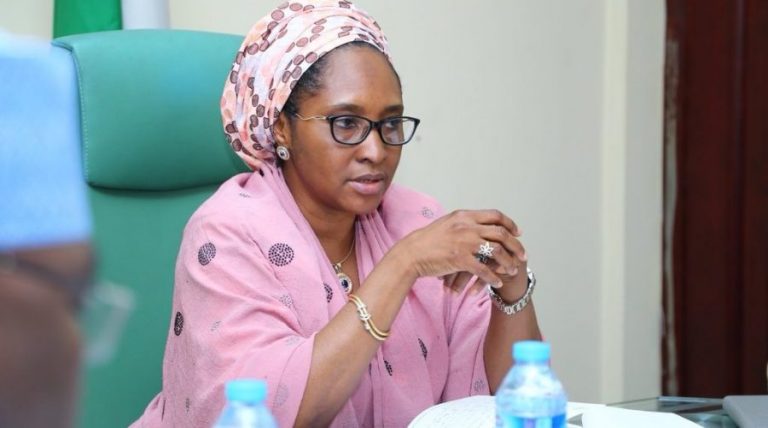
As Nigeria’s public debt climbs to N41.6trn
Nigeria’s fiscal position worsened in the first four months of the year as the cost of repaying debt surpassed the government’s revenue in the first quarter of 2022.
According to details of the 2022 fiscal performance report for January through April, Nigeria’s total revenue stood at N1.63 trillion while debt servicing stood at N1.94 trillion, showing a variance of over N300 billion.
Nigeria’s Minister of Finance, Budget and National Planning, Zainab Ahmed, on Thursday warned that urgent action is needed to address the nation’s revenue challenge and expenditure efficiency at both the national and sub-national levels.
The report showed that gross oil and gas federation revenue for the first four months of the year was projected at N3.12 trillion but as at April 30, only N1.23 trillion was realised, representing a mere 39% performance.
Despite higher oil prices, the report showed that oil revenue underperformed due to significant oil production shortfalls such as shut-ins resulting from pipeline vandalism and crude oil theft as well as high petrol subsidy cost due to higher landing costs of imported products.
However, non-oil taxes trailed targets marginally, with average performance of 92.6%.
“Revenue performance is expected to improve in the second half of 2022 as a result of concerted efforts to address the oil theft and pipeline vandalism, the report said. It added that there is also seasonality to some of the non-oil taxes, which means that the nation expects to collect significantly more in the second half of the year.
“The improved revenue collection should also moderate the Debt Service to Revenue ratio, which is currently above our target level,” the report said.
The expectation of improved revenue collection should also moderate the debt service to revenue ratio, which is currently above the nation’s target level.
In the first quarter of 2020, Nigeria’s debt service as a percentage of revenue rose to 99%, according to the Medium-Term Expenditure Framework and Fiscal Strategy (MTEF/FSP) report released by the Federal Ministry of Finance, Budget, and National Planning.
The data showed that in Q1 2020, Nigeria incurred a total sum of N943.12 billion in debt service while the Nigerian government retained revenue at N950.56 billion. In effect, Nigeria’s debt service to revenue was estimated to be 99% during the period.
On Thursday, the new report showed that the Nigerian government’s share of oil revenues in Q1 2022 was N285.38 billion (representing 39 percent performance), while non-oil tax revenues totalled N632.56 billion, representing 84 percent. In essence, the government generated N401.8 billion from company income tax (CIT) and value-added tax (VAT) as CIT and VAT collections were N298.83 billion and N102.97 billion, respectively, representing 99 percent and 98 percent of their respective targets.
Customs collections (made up of import duties, excise and fees, as well as federation account special levies) trailed target by N76.77 billion (25.42 percent) while the other revenues amounted to N664.64 billion, of which independent revenue was N394.09 billion.
The report noted that for Nigeria, “fiscal risks are somewhat elevated”, following weaker-than-expected domestic economic performance and structural issues in the domestic economy. It warned that revenue generation remains the major fiscal constraint of the nation and the systemic resource mobilization problem has been compounded by recent economic recessions.
The underlying factors also include the Russia and Ukraine war, which the report said has assumed a new and worrisome dimension with severe implications on food and energy prices. It listed the resurgence of COVID -19 in some major economies, which has led to slowdown in economic activities in those countries; as well as renewed elevated inflation in most economies, prompting monetary tightening in these economies with the inherent negative impact on capital inflow to emerging markets economies.
Also identified as a contributing factor is the challenging domestic macroeconomic and business environment and the negative impact of insecurity on the domestic economy.
“Efforts will however focus on improving tax administration and collection efficiency,” the report said.
“Crude oil production challenges and PMS subsidy deductions by NNPC constitute significant threat to the achievement of our revenue growth targets, as seen in the 2022 Performance up to April.
“Bold, decisive and urgent action is urgently required to address revenue underperformance and expenditure efficiency at national & sub-national levels.”
Nigeria’s public debt climbs to N41.6trn
Meanwhile, Nigeria’s total public debt stock, comprising the debt obligations of the federal government, states and the Federal Capital Territory (FCT) rose from N39.56 trillion in December 2021 to N41.60 trillion ($100.07 billion) in the first three months of 2022 (January to March), the Debt Management Office (DMO) revealed yesterday.
In addition, the domestic debt service obligations of the federal government stood at N668,685, 710,112.98 in the first three months of 2022.
According to the DMO, with the increase in the country’s debt profile, its total public debt-to-gross domestic product (GDP) now stands at 23.27 per cent, as against 22.43 per cent December 31, 2021.
The DMO, in a statement posted on its website explained: “The amount represented the domestic and external debt stocks of the Federal Government of Nigeria, the 36 state governments and the Federal Capital Territory. The comparative figures for December 31, 2021, were N39.56 trillion or $95.78 billion.”
The total public debt stock, the agency said, included new domestic borrowing by the FGN to partly finance the deficit in the 2022 Appropriation Act, the $1.25 billion Eurobond issued in March 2022 and disbursements by multilateral and bilateral lenders.
According to data posted by the DMO, the federal government’s total domestic debt as at March 31, 2022, stood at N20.144 trillion (N20,144,027,724,703).
In the same vein, the federal government’s domestic debt service of N668,685 billion for the review period was for Nigerian Treasury Bills (NTBs), Federal Government Bonds, FGN Savings Bond, and FGN Sukuk Rentals.
A breakdown of the debt service obligations showed that N188,364,772,069.17 was paid out in January, N103,883,183,876.20 in February and N376,437,754,167.61 in March.
Federal government bonds accounted for the lion share of N630,535,774,886.21 followed by NTBs with N29,642,197,193.31 and FGN Sukuk Rentals N8,167, 315,066.60. Similarly, FGN Savings Bond took the rear with N340,422,964.8 million. Total debt service for NTBs in January was N3,220,890,038.78, while February and March were N7,23, 906,633.90 and N19, 189,400,520.63.
For Federal Government Bonds, a total debt service of N185,026,886,879.94 was paid in
January, N96,527,951,065.07 in February, and N348,980,936,941.20 in March. Also, the DMO data showed that FGN Savings Bond gulped debt service of N116,995,150.45 in January, N123, 326,177.23 in February and N100,101, 637.18.
There was no debt service pay out for FGN Sukuk Rentals in January and February, but in March, a total of N8,167, 315,066.60 was paid.
Meanwhile, Nigeria’s external debt stock as at March 31, 2022 stood at $39,969.19 billion.
This comprised debts for multilateral and bilateral creditors as well as commercial loans.
Nigeria owes the largest chunk of $18,957.22 billion to multilateral creditors, including the World Bank Group, International Monetary Fund (IMF), African Development Bank, European Development Fund Arab Bank for Economic Development in Africa, Islamic Development Bank, and the International Fund for Agricultural Development (IFAD).
Out of the $18,957.22 billion owed multilateral agencies, $12,229.43 billion and $486.10 million respectively to the International Development Association (IDA) and the International Bank for Reconstruction and Development (IBRD)- two members of the World Bank Group.
It is also indebted to the International Monetary Fund (IMF) to the tune of $3,395.08 billion and $4 495.87 billion to bilateral creditors, including China Exim Bank $3,667.65 billion), Agency Francaise Development of France ($567.89 million) and KfW of Germany ($164.04 million), among others.
Nigeria’s second external debt obligation were commercial loans, standing in excess of $15.918 billion. This included Eurobonds and Diaspora Bond.
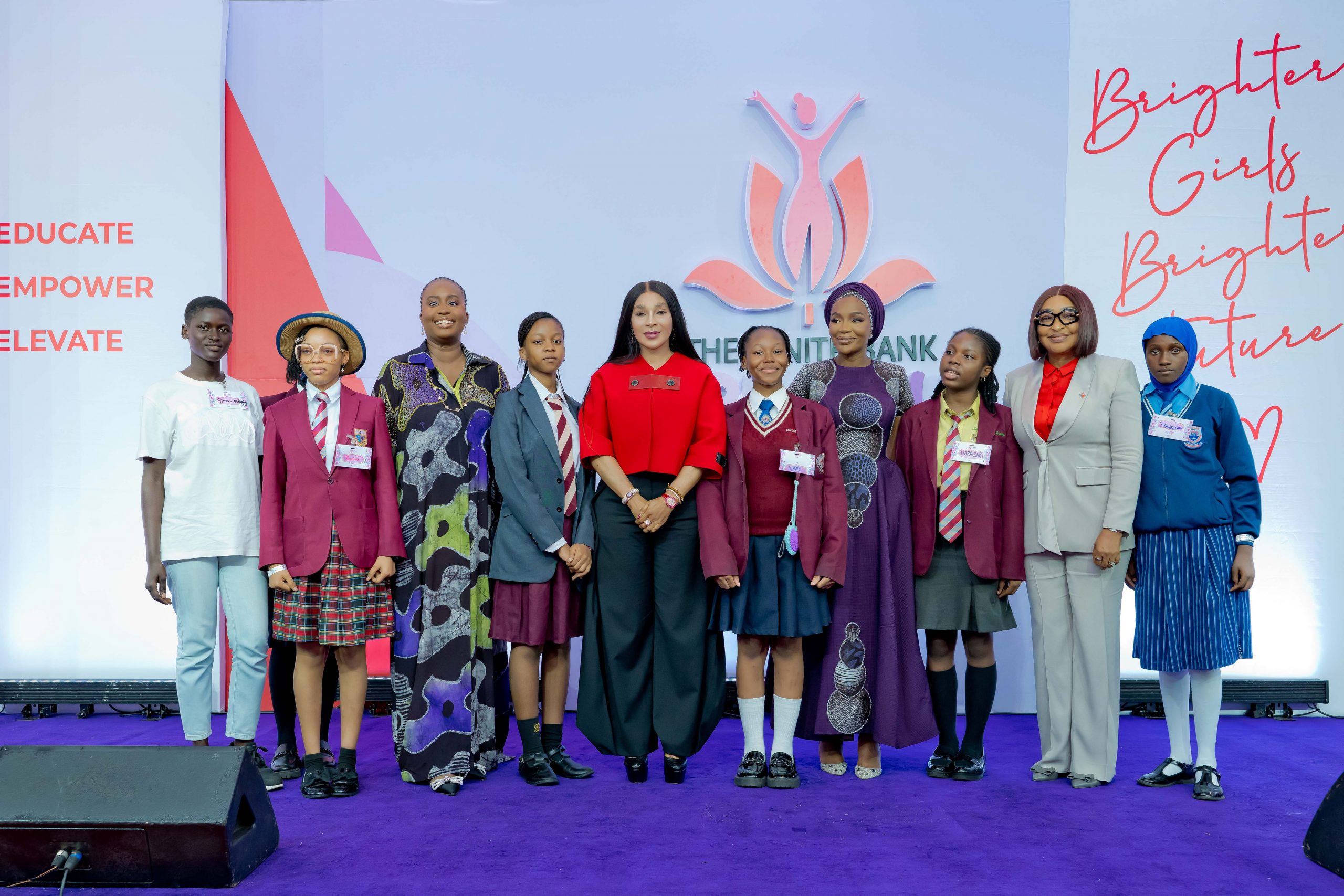
Zenith Bank Plc has launched the maiden edition of its Girl-Child Empowerment Programme, themed “Banking on Her Tomorrow,” bringing together 300 schoolgirls aged 13 to 17 from selected schools across Lagos for a day of learning, mentorship and personal development.
Held on Monday, October 12, 2026, at the Civic Centre, Victoria Island, Lagos, the programme featured sessions on finance and investment, etiquette and personal development, social media ethics, and social relationships and interactions, equipping participants with practical knowledge and skills for their personal, educational and future career journeys.
The initiative, a brainchild of the Bank’s Group Managing Director/Chief Executive Officer, Dame (Dr.) Adaora Umeoji, OON, reflects Zenith Bank’s commitment to nurturing the potential of young girls and helping them make informed choices about their futures.
In her welcome address, Dame (Dr.) Umeoji urged the participants to believe in their abilities, pursue their ambitions and remain focused and disciplined. Drawing on examples of young girls who have achieved remarkable feats, she challenged them to look beyond their present circumstances and envision the women they aspire to become.
“To all my amazing young ladies here today, each of you possesses gifts, talents, and ideas that are capable of revolutionising the world. You can revolutionise the world with your ideas,” she said.
The GMD/CEO further encouraged the girls to explore their interests and resist societal limitations, stressing the importance of taking ownership of their futures.
“Never allow gender or age to limit your goals. Whatever interests you today, explore it. Whatever you choose to pursue in life, give it your best shot,” she said.
Delivering the keynote address, Her Majesty, Olori Atuwatse III, Queen Consort of the Warri Kingdom, encouraged the girls to embrace their identities, develop resilience and use their abilities to make a positive difference in the lives of others.
Using the mangrove tree as a metaphor for resilience, she reminded the participants that challenges need not define their futures and that their worth extends beyond academic results and external expectations.
“Every time you affirm the truth about who you are, you are building confidence. Every time the tide of life goes out and you are still standing, you are building resilience. And every time you use your gifts for another person, you are discovering your purpose,” Olori Atuwatse III said.
The programme featured interactive sessions led by accomplished professionals and personalities:
Ayanime Edem, founder of The Elite Finishing School and modern etiquette educator, discussed confidence, communication, self-presentation and etiquette.
Nigerian actress and content creator Bukunmi Adeaga Ilori, popularly known as Kie Kie, addressed responsible social media use, authenticity and digital boundaries.
Representing Zenith Bank, Thelma Okonye and Adesola Adeyemo introduced the girls to saving, responsible money management and investment, highlighting the importance of developing sound financial habits early.
While Nigerian filmmaker, creative executive and educator, Praise Onyeagwalam, Director Pink, led a session on healthy relationships, self-awareness and effective communication.
The sessions encouraged active participation, giving the girls opportunities to ask questions and engage with the speakers on issues relevant to their experiences and aspirations.
The programme also featured competitions, with cash prizes totalling over ₦1 million awarded to winners. The participants received books to encourage reading and personal growth, while musical performances by Nigerian singers Qing Madi and No. 11 added to the lively atmosphere. The event was hosted by Temi Badru, public speaker, communications coach and lawyer, with Darasimi Destiny Nadi serving as mini host.
Delivering the closing remarks, Executive Director, Zenith Bank Plc, Dr. Mrs. Adobi Nwapa, highlighted the GMD/CEO’s vision for the initiative and the Bank’s commitment to sustaining its impact.
“The programme is the vision of our GMD/CEO, who conceived and championed it, demonstrating her unwavering commitment to the empowerment of the girl child. Through her leadership, she has shown the girls what is possible when a woman dares to lead. At Zenith Bank, our commitment to the girl child extends beyond today, and we will continue to nurture their aspirations through this annual initiative,” she said.
Dr. Nwapa thanked the speakers and participants for contributing to the programme’s success and encouraged the girls to apply the lessons learnt, remain confident and pursue their aspirations with determination.
The initiative builds on Zenith Bank’s longstanding commitment to advancing opportunities for women and girls through programmes including its annual International Women’s Day Seminar, the Zenith Women’s Basketball League, the Women of Honour Awards in partnership with the Ford Foundation, the Pad-a-Queen Initiative and Z-Woman, which supports women-owned businesses through business support and access to credit at discounted rates.Through “Banking on Her Tomorrow,” Zenith Bank is extending this commitment to a younger generation, equipping girls with the knowledge, skills and confidence to pursue their ambitions and contribute meaningfully to their communities and society.
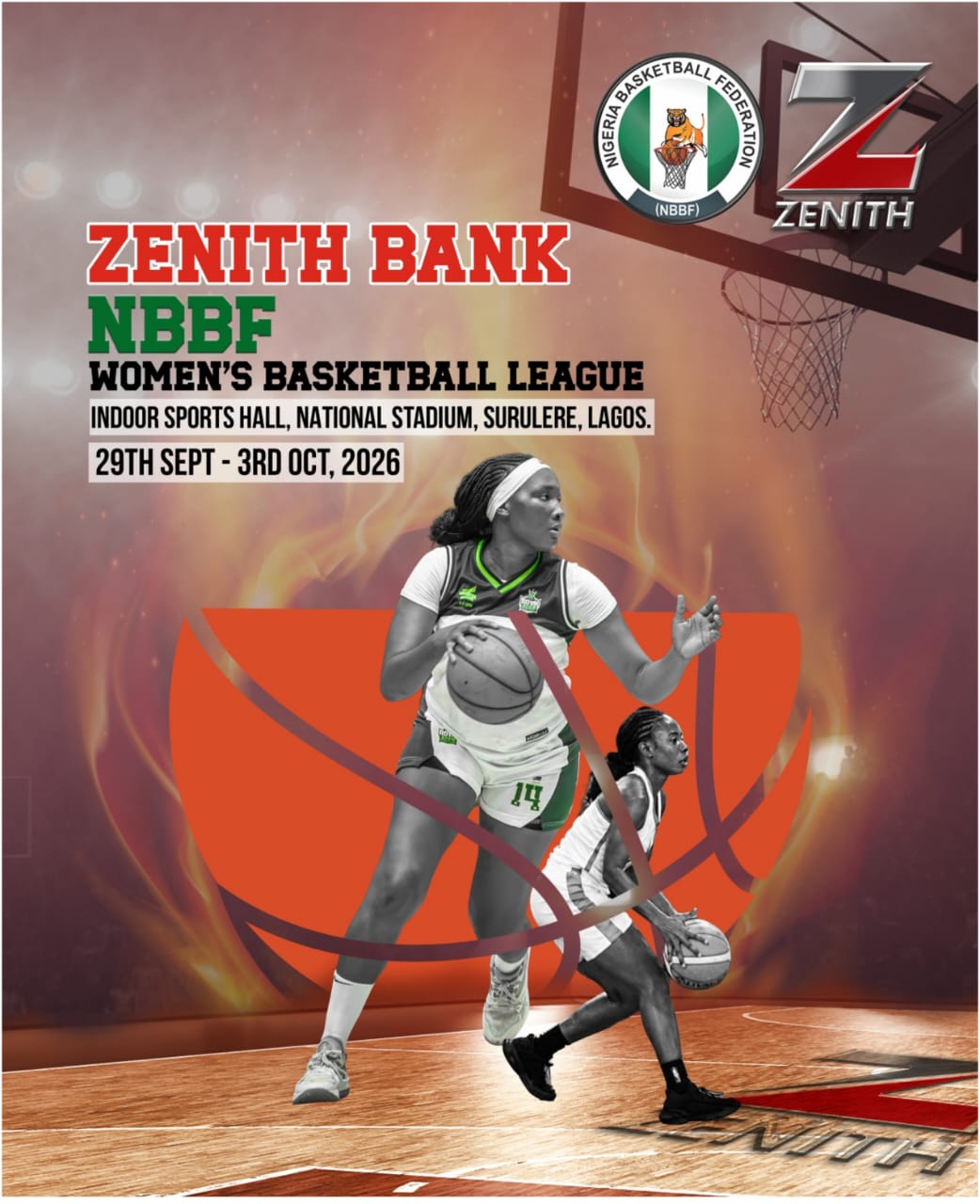
The road to the 2026 Zenith Bank NBBF Women’s Basketball League title reaches its defining stage as the nation’s top eight teams converge on the Indoor Sports Hall of the National Stadium, Surulere, Lagos, from September 28 to October 3, 2026, for the highly anticipated national Finals.
Emerging from fiercely contested Atlantic and Savannah Conference campaigns, Nigeria Customs, AS Sky Queens, Titans, Air Warriors, MFM, First Bank, Victoria Queens, and Bayelsa Blue Whales have earned their place in the final battle for national honours.
And there is plenty to look forward to.
Last year’s champions, Dolphins Basketball Club, who lifted the trophy after defeating First Bank in the final, will not be in the mix this year after failing to make the top 4 of the Atlantic Conference, leaving the title firmly up for grabs and setting the stage for a new champion to emerge.
But the trophy will be contested by teams with plenty of championship pedigree.
First Bank, last year’s finalist and the most successful team in the history of the competition, arrives with a record nine league titles, while MFM will be looking to draw on its recent dominance after winning back-to-back championships in 2023 and 2024. With both sides among the Final 8, history, experience and ambition will collide as the battle for the crown unfolds.
It is a level of competition that reflects the growth of a league that has, for more than two decades, provided a platform for Nigeria’s best female basketball talents to emerge, compete and develop. At the heart of that journey has been Zenith Bank, the sole sponsor of the National Women’s Basketball League since 2005.
Through its partnership with the Nigeria Basketball Federation (NBBF), Zenith Bank has consistently supported the development of women’s basketball, helping to provide and sustain a competitive platform where talents can be discovered, nurtured and prepared for the highest levels of the sport.
The league has also served as an important pathway to the National Women Basketball team, D’Tigress, with several players who have featured prominently for Nigeria emerging from the domestic competition. Beyond the national team, the league continues to contribute to youth development by giving young female athletes the opportunity to build confidence, skill, discipline, teamwork and professional sporting careers.
Now, the spotlight turns to Lagos. Which team will grab the opportunity to write a new chapter in the history of Nigerian women’s basketball?
Eight teams. One destination. One crown.
For Zenith Bank, the sponsorship of the Women’s Basketball League represents more than support for a sporting competition. It reflects the Bank’s broader commitment to creating platforms that provide opportunities, develop potential and make a meaningful difference in the lives of young Nigerians.
This commitment extends across several areas of community development, with notable initiatives including:
- The reconstruction and beautification of Ajose Adeogun Street and Roundabout.
- The annual Zenith Bank Youth Parade and Light-Up Ceremony.
- The construction of ICT Centres in tertiary institutions across the country.
- The construction of the ultra-modern Iga Iduganran Primary Healthcare Centre, among others.
Through these initiatives and its longstanding support for women’s basketball, Zenith Bank continues to demonstrate that its commitment to society goes beyond banking, with a focus on creating opportunities and contributing to the development of communities and the next generation.
In line with its commitment to environmental sustainability and responsible business practices, Zenith Bank Plc has commemorated the 2026 World Environment Day with a two-phase environmental clean-up initiative in Lagos State, held under the global theme “Inspired by Nature. For Climate. For Our Future.”
The first phase was a morning clean-up conducted by staff of the Bank on Wednesday, 3 June 2026, along Ajose Adeogun Street, Victoria Island, Lagos. The exercise mobilised employees to clear waste, sensitise residents on proper disposal practices, and reinforce the Bank’s culture of community service and environmental stewardship.
The second phase, on Thursday, 4 June 2026, featured a waterways clean-up at the Falomo Waterways, Ikoyi, Lagos, executed in collaboration with the Lagos Waste Management Authority (LAWMA) and the Lagos State Waterways Authority (LASWA). The joint effort focused on removing marine debris, promoting cleaner waterways, and supporting the State’s broader climate-resilience agenda.
Speaking on the initiative, Dame Dr. Adaora Umeoji, OON, Group Managing Director/CEO of Zenith Bank Plc, said: “At Zenith Bank, sustainability is integral to how we operate. Clearing our streets and our waterways is a practical reminder that protecting the environment is a shared responsibility – and one we are proud to take up alongside LAWMA and LASWA. Through these exercises, we are taking deliberate action to preserve our communities, support climate action, and inspire others to act. Our operations will continue to align with global environmental standards as we build a more sustainable future for Nigeria and Africa.”Zenith Bank remains committed to embedding Environmental, Social and Governance (ESG) principles across its operations, investing in green initiatives, energy efficiency, and community-focused programmes. These efforts advance the United Nations Sustainable Development Goals – particularly SDG 7 (Affordable and Clean Energy), SDG 11 (Sustainable Cities and Communities) and SDG 13 (Climate Action). Sustainability remains an operational imperative across the Bank’s Nigerian base and its broader African, UK and European footprints.
-
 Politics2 years ago
BREAKING: Abiodun emerges chairman of Southern Governors Forum
-
 News2 years ago
NLC And TUC Reveals Reason Why Labour Accepted ₦70000 Minimum Wage
-
 Business1 year ago
ZENITH BANK ASSURES SHAREHOLDERS OF QUANTUM LEAP IN FUTURE DIVIDENDS AT 34TH AGM, PAYS N195.67 BILLION FOR 2024 FINANCIAL YEAR
-
News2 years ago
Zenith Bank Enhances Customer Online Experience with Revamped Digital Channels
-
 News2 years ago
‘No Disparity,’ NUPRC Confirmed 1.8m bopd NNPC Ltd Oil Production Figures At NAPE Conference’
-
 News2 years ago
FirstBank holds groundbreaking ceremony for new 40-storey eco-friendly HQs in Lagos
-
 News2 years ago
FIRSTBANK FILES APPEAL
-
Business2 years ago
ZENITH BANK ACHIEVES DOUBLE-DIGIT GROWTH IN GROSS EARNINGS, PROPOSES N4.00 FINAL DIVIDEND IN FULL YEAR 2024