
News
Finally, Tinubu speaks on ‘Amotekun

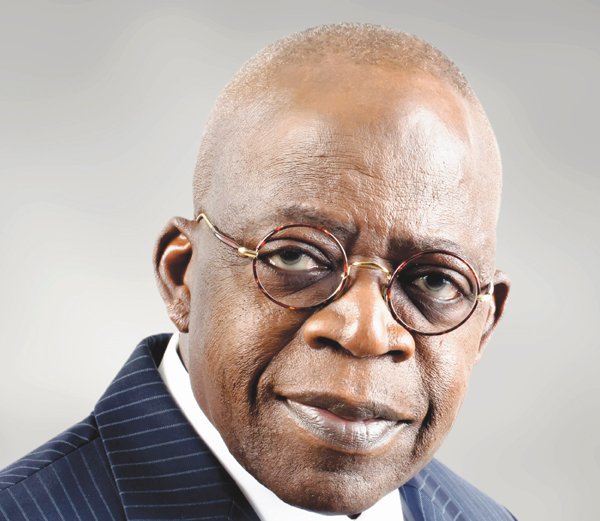
Bola Tinubu, national leader of the All Progressives Congress (APC), has broken his silence on the raging debate on Amotekun, the regional security outfit established by governors of the south-west zone.
He said the foundation of the country had not been put at risk with the south-west regional security outfit launched by the governors of the zone in a bid to confront the insecurity in their states.
He said this in a statement signed by him and issued on Wednesday.
Read the full statement below:
Amotekun: Tinubu Speaks, Calls for Dialogue
*Says Nigeria’s Fabric Not at Risk with SW Security Outfit
All Progressives Congress National Leader, Asiwaju Bola Tinubu, has called for private discussion between the Governors of the South-west and the Attorney-General and Minister of Justice, Mallam Abubakar Malami, over Amotekun.
He said the foundation of the country had not been put at risk with the South-west regional security outfit launched by the governors of the zone in a bit to confront the insecurity in their states.
The former Lagos governor, however, warned that, that fabric could be torn by what he called the “dangerous rhetoric of those who should know better.”
In his first intervention in the controversy surrounding Amotekun, Asiwaju Tinubu said: “Those claiming that this limited, inoffensive addition to security threatens the Republic have taken themselves upon a madcap excursion.
“Those claiming that the Federal Government seeks to terribly suppress the Southwest have also lost their compass. Those who occupy these two extremes have sunken into the dark recesses of fear and political paranoia that can undo a nation if such sentiments are allowed to gestate”.
Titled “The Public Discourse Over Amotekun,” the statement personally signed by him reads: “Amotekun. This issue has dominated recent discourse and media headlines. Distilled to its basics, it concerns how best state governments can assist with the safety and security of their residents. This is a matter of serious concern entitled to sober thought. However, it has been turned into a political tug-of-war. Fierce, often unthinking rhetoric, for and against, has crossed the lips of too many Nigerians. More subjective talking than objective thinking has been the fuel of this outburst.
“Question those in favour of Amotekun. Most have but the vaguest notion about it. They know few details yet vigorously attribute to its opponents the most negative intentions. Ask those who oppose Amotekun. They are equally ignorant of its provisions. They oppose the initiative not on its merits but merely because it was proposed by their political opponents or because they don’t see an avenue for personal gain from it.
“While colourful, the rhetoric has been disconcerting. How people have mishandled this matter demonstrates that we still have far to go in perfecting this democracy. Too much energy has been spent distorting this issue instead of seeking a resolution that supports local enhancement of security while keeping the constitution intact. If this becomes the standard for how we handle disagreements then we will obscure Nigeria’s path forward with our own rubbish.
“In this matter, I do not see malign intent in the differences of opinion between the SW Governors as authors of Amotekun and the Attorney-General as the primary law enforcement officer of the Federal Government. Shorn of the overly dramatic language, what lies before us is but a step in the evolution of our federalism. This is an opportunity to more clearly define that federalism; but one cannot attain this better, more functional definition through overblown, emotional language. Objectivity and calmness are required. To a significant degree, the enduring quality of our republic will be established by the sagacity with which we handle disagreements regarding the division of power between federal and state governments. Such disagreements are inevitable. This is not the first. Nor will it be the last. We must devote our energies more toward solving problems rather than amplifying them.
“Seeking to fulfil their mandates by helping protect their people, the governors of the Southwest collectively established a program to buttress existing security mechanisms. Seeking to protect the constitution as best he could, the Attorney-General offered his opinion on what he believed the governors have sought to do. No one can blame either party for seeking to fulfil what they genuinely see as their public duty.
“Until now, I have deliberately maintained a studied silence regarding Amotekun. Many have tried to goad my swift public reaction. Those who have taken this road did so not because they care about Amotekun or even the people it intends to help protect. They did so knowing this had become a delicate and emotional issue for many. These cynics did so with the adversarial hope that, in haste, I might misspeak or misstep in a manner they could twist to their political advantage.
“Such people are possessed of a mercenary aspect that permits them to sacrifice almost anything, even jeopardize the very foundations of our political unity, if they might exact personal gain from the upheaval. In that they know no nobler purpose than their own appetites, we should feel sorry for them. However, we must not allow our sympathies for their barren condition to persuade us that there is worth in their destructive misconduct. They must be left to the consequences of their own devices.
“If truly I am a political leader as I am often described, then I have not the luxury of hasty, ill-conceived utterances. There are those who will use inflamed words to spark the passions of others. This may bring transient applause. But when the cheers fade, we shall only have further descended because their words were never inclined toward resolution and long-term improvement but toward short-term popularity and perpetual confrontation.
“I believe in this nation and its benign prospects. I dearly love its people, all of them. Over the years of our existence, they have suffered much. Yet they still hold forth with heroic patience and an extraordinary optimism born of strong faith. To these people I owe my best. I shall not treat them cheaply or bandy their emotions like some errant football. The welfare of this good and decent people is my overriding concern.
“Equally, I do not cow to the demands of those who press for me to make a premature statement on an important issue. Again, that is a game devised by those who care more about political cleverness than the quality of governance. I chose to talk when my position has been made ripe by a collection of the facts and a reasonable assessment of those facts.
“As I view it, this matter can be divided in three major parts: 1) Substantive merits of Amotekun, 2) Decision-making and consultative process and 3) Recommendations on the way forward.
AMOTEKUN, GOVERNORS AND SECURITY
“As the highest elected official in his state and thus the individual embodiment of the will of the people, a governor must view safety and security as a foremost priority, integral to his mandate. To turn a blind eye to these concerns would be a grave dereliction. That the SW Governors seek to work together to complement the extant security architecture is, in principle, a commendable undertaking. In embracing this concept, they have acted in consonance with spirit of their offices for the better interests of their people.
“As Governor of Lagos State, I confronted a burgeoning criminal menace. I could not sit idly in the face of the violence and property destruction that struck genuine fear in the hearts of the people. The police tried as best they could; but their coverage was thin. They simply did not have the personnel or material wherewithal to be everywhere at once. We formed Neighbourhood Watch to help fill the gap.
“Our aim was not to replace existing structures but to complement and augment them. The mission of Neighbourhood Watch was to monitor the wards and neighbourhoods of the state. The group would gather information and intelligence to pass to the police and security authorities. The Neighbourhood Watch also provided an early warning system to keep citizens from harm’s way. The idea worked. Crime and violence reduced significantly. Even the overreaching Obasanjo government did not contend against Neighbourhood Watch.
“Judging from the public statements of the governors, Amotekun is meant to be structured along similar lines. As I understand it, Amotekun is to be another set of eyes and ears to assist the police. As such, it is but the second generation of Neighbourhood Watch expanded to a regional scale. Conceptually, there is nothing wrong with this. It does not appear to insult the constitution. However, my position regarding Amotekun is not blind or uncritical; there are several organisational and functional aspects of the proposal that could cause some problems if left unresolved.
“First, the stated mission is information gathering by civilians. Such tasks are always and everywhere best done in low-key fashion. Some aspects of Amotekun seem to undermine rather than enhance this function.
Second, equipping Amotekun with showy paraphernalia may cause the public to misconstrue the role of Amotekun, incorrectly believing its mandate is more expansive than it is. This possible disconnect could impede the good aims of the program.
“We also should consider that the Buhari administration has approved implementation of a policy of community policing wherein additional recruits from all 774 local government areas will be added to the force to help protect their own communities. As the Federal Government emphasizes grassroots policing it is uncertain how well Amotekun can complement the police force as the force moves toward greater decentralisation when Amotekun is organisationally leaning in the opposite way.
“We have been fighting for local and decentralised policing for a long time because we know that too much centralisation impedes performance. In regard to actual performance of its appointed tasks, Amotekun should have focused on grassroots local organisation at the state level without a regional command hierarchy. The regional approach may undermine efficiency. There is no compelling logic why the same personnel providing security & informational assistance in Ado-Ekiti should be under the same functional and operational leadership as those providing assistance in Lekki or Akure. This will not lead to optimal performance.
“The regional approach has only limited benefit with regard to the procurement and maintenance of vehicles and communications equipment because this wider approach allows for economies of scale. The regional approach also helps tackle the growing incidences of interstate criminal activity. Some things need to be corrected before Amotekun becomes operational. If not, it will not live up to expectations. Thus, the current formulation of Amotekun is in need of repair before it takes to the road only to quickly slip into a ditch.
CONSULTATIVE PROCESS BREAKS DOWN
“The governors state that they consulted regularly with the police and security agencies. This was the right thing to do. However, their failure to include the office of the Attorney-General in these discussions is the fount of the current public uproar. This was an unfortunate omission the governors should regret and seek to remedy. However, the conceptual merits and positive functional aspects of Amotekun should not be tainted by this procedural defect.
“While the Attorney-General is a conscientious public servant, he is also human. Not having been consulted, he was suddenly faced with an unexpected public announcement regarding a matter within his official ambit. He likely feared the failure to consult him meant that federal prerogatives were being encroached. To blame him for this conclusion would be to blame human nature itself. Though his negative reaction was understandable it was also unhelpful.
“The Attorney-General acted hastily in rendering a public statement that was more inaccurate than it should have been. Amotekun was never proposed as a “defence” agency; the Attorney-General erred in using this description. The use of uniforms and brightly coloured vehicles may not be the best ideas but they do not render Amotekun a defence agency or paramilitary group any more than a designated school van carrying uniformed students constitutes a paramilitary deployment.
“Believing the governors had crossed the line, the Attorney-General should have reached out to them. Before going public, he should have sought a private meeting so that he could have a better factual understanding of Amotekun. This would have enabled him to give the governors any specific constitutional or other objectives he might have. In this way, the two sides would have engaged in private consultations to reach agreement on the way forward. This cooperative process might have helped to correct some of the organisational lapses above identified. Such a diplomatic and wise step also would have prevented the current public acrimony now surrounding the issue.
RECOMMENDATIONS FOR RESOLUTION
“This matter cannot be resolved on the pages of newspapers or by attributing negative motives to either side. The best way to resolve this is still for the two sides to enter private discussions. Either the governors should seek an official but private meeting with the Attorney-General, or the Attorney-General can initiate the contact. Since Amotekun is their initiative, the governors bear the greater onus in seeking the meeting.
“The meeting will initiate further discussion on how to resolve what appears to be a misunderstanding caused by an unfortunate lack of communication. Remedy the gap in communication and the misunderstanding will begin to disappear.
Last, I again stress to well-intentioned Nigerians to shun those who employ heated language to inflame emotions. It does us no good to rush toward exaggerated statements that suggest calamity of the highest order. Don’t allow yourselves to be fodder for those who seek to divide us.
“The fabric of the Republic has not been put at stake by Amotekun. However, that fabric could be torn by the dangerous rhetoric of those who should know better. Those claiming that this limited, inoffensive addition to security threatens the Republic have taken themselves upon a madcap excursion. Those claiming that the Federal Government seeks to terribly suppress the Southwest have also lost their compass. Those who occupy these two extremes have sunken into the dark recesses of fear and political paranoia that can undo a nation if such sentiments are allowed to gestate.
“We are one nation, 200 million strong with 36 states and a great complex of federal authority residing in dozens of federal ministries and agencies. If everyone is allowed their democratic expression, there are bound to be disagreements. This is inherent in the federal structure. Nations that have practiced federalism much longer than us still frequently debate over where the line between state and federal power is to be drawn. They have hundreds of court cases each year on this very issue. Yet they do not attack each other as we do. We must all learn to be more restrained and judicious in our reactions when such disagreements arise.
“Before leaping from our seats to lift our voice to the high rafters in profound indignation, we first would be wise to properly discern the situation. We must ascertain whether it merely is a tempest in a teapot or whether our house and all its teapots are swirling in a real tempest. Despite the ominous headlines and heated talk, an objective analysis points more clearly to the former than the latter. The resolution of this matter is not beyond us if only we allow ourselves to be the democrats that our better conscience and the very documents of our national existence call us to be.
“In trying to help resolve this matter, I have initiated communication with the Chairman of the South West Governors’ Forum, Arakunrin Rotimi Akeredolu, with a view to meeting the South West governors to explore amicable solutions to the avoidable controversy. I am sure that, at the end of it all, peace, security, and progress shall reign in our nation. Thank you.”
Asiwaju Bola Ahmed Tinubu
National Leader, APC
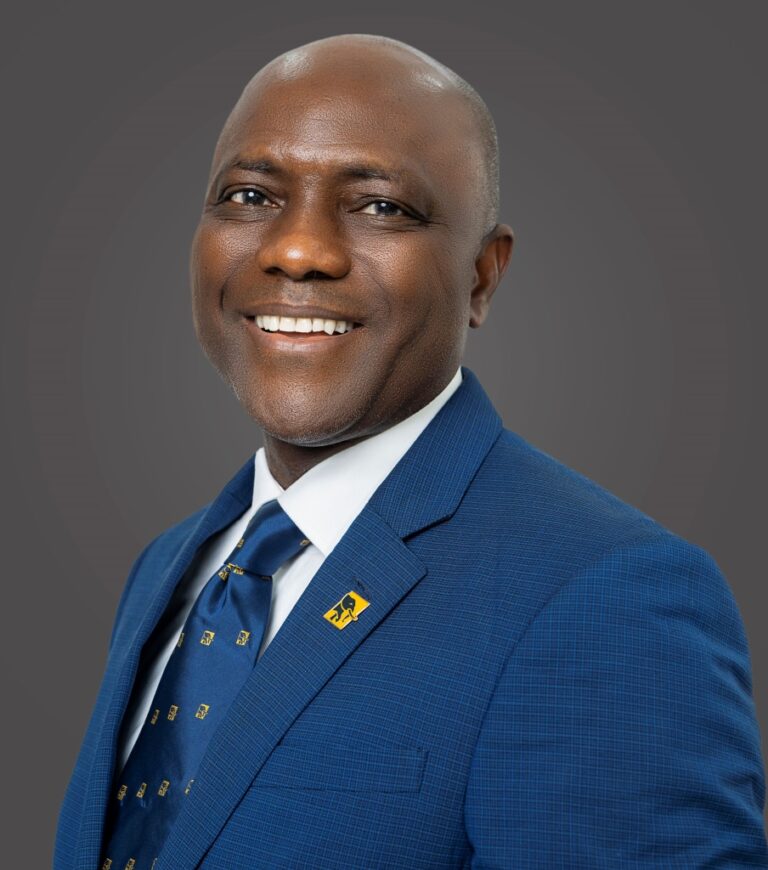
- INJUNCTION AND STAY OF EXECUTION
- CARGO REMAINS UNDER ARREST
In a surprising twist of events, its decision delivered today, the Federal High Court in a surprising shift from the true nature of FirstBank ’s claim held that the matter is not a maritime claim but rather, a simple case of debt recovery. This is quite surprising considering the fact that the order sought is to prevent further fraudulent sale of crude on the FPSO.
Shockingly, the court also held that the Arrest Order against the cargo, because it was exparte in nature, expired by effluxion of time within 14 days of its issuance.
Aggrieved by the decision, FirstBank lodged an appeal against the decision of the FHC. Also, FirstBank filed an application for an injunction of the court against GHL, pending the determination of the appeal. The Cargoes of Crude Oil on the FPSO TAMARA TOKONI remain arrested.
While FirstBank has great respect for the courts, it strongly disagrees with the ruling, which, in our view, constitutes a miscarriage of justice.
FirstBank remains committed to protecting and securing the interest of its members and will relentlessly pursue justice against mischievous debtors seeking to use the machinery of the law to perpetuate mischief and evade their responsibility to offset outstanding obligations.
About FirstBank
First Bank of Nigeria Limited “FirstBank”, established in 1894, is the premier bank in West Africa, a leading financial inclusion services provider in Africa, and a digital banking giant.
FirstBank’s international footprints cut across three continents ─ Africa, Europe and Asia, with FirstBank UK Limited in London and Paris; FirstBank in The Democratic Republic of Congo, Ghana, The Gambia, Guinea and Sierra Leone; FBNBank in Senegal; and a FirstBank Representative Office in Beijing, China. All the subsidiary banks are fully registered by their respective Central Banks to provide full banking services.
Besides providing domestic banking services, the subsidiaries also engage in international cross-border transactions with FirstBank’s non-Nigerian subsidiaries, and the representative offices in Paris and China facilitate trade flows from Asia and Europe into Nigeria and other African countries.
For 130 years, FirstBank has built an outstanding reputation for solid relationships, good corporate governance, and a strong liquidity position, and has been at the forefront of promoting digital payment in the country with over 13 million cards issued to customers (the first bank to achieve such a milestone in Nigeria). FirstBank has continued to make significant investments in technology, innovation and transformation, and its cashless transaction drive has been steadily accentuated with virtually 23 million active FirstBank customers signed up on digital channels including the USSD Quick Banking service through the nationally renowned *894# Banking code.
With over 42 million customer accounts (including digital wallets) spread across Nigeria, UK and sub-Saharan Africa, the Bank provides a comprehensive range of retail and wholesale financial services through more than 820 business offices and over 233,500 agent locations spread across 772 out of the 774 Local Government Areas in Nigeria.
In addition to banking solutions and services, FirstBank provides pension fund custody services in Nigeria through First Pension Custodian Nigeria Limited and nominee and associated services through First Nominees Nigeria Limited.
FirstBank’s commitment to Diversity is shown in its policies, partnerships and initiatives such as its employees’ ratio of female to male (about 39%:61%; and 32% women in management) as well as the FirstBank Women Network, an initiative that seeks to address the gender gap and increase the participation of women at all levels within the organisation. In addition, the Bank’s membership of the UN Women is an affirmation of a deliberate policy that is consistent with UN Women’s Women Empowerment’s Principles (WEPs) ─ Equal Opportunity, Inclusion, and Nondiscrimination.
For six consecutive years (2011 – 2016), FirstBank was named “Most Valuable Bank Brand in Nigeria” by the globally renowned The Banker Magazine of the Financial Times Group and “Best Retail Bank in Nigeria” eight times in a row, 2011 – 2018, by the Asian Banker International Excellence in Retail Financial Services Awards.
In 2022, the Top 100 African Bank rankings released by The Banker Magazine ranked FirstBank as number one in Nigeria in terms of Overall Performance, Profitability, Efficiency and Return on Risk. Also in 2022, the Bank received the “Most Innovative Retail Banking Product in Nigeria (FastTrack ATM)” and “Best Retail Bank in Nigeria” awards from International Finance Magazine. FirstBank was also awarded “Best Corporate Banking Western Africa, 2022” and “Best CSR Bank Western Africa, 2022’’ by Global Banking and Finance Magazine.
Other notable awards in FirstBank coffers include: “Best Bank in Nigeria” by Global Finance magazine – fifteen times in a row; “Best Private Bank in Nigeria-2021” awarded by Global Finance magazine; “Best Internet Banking Nigeria” and ‘’Best CSR Bank Africa’’ by International Business Magazine.
In 2023, FirstBank received notable awards including “Best Private Bank for Sustainable Investing in Africa 2023” by Global Finance Awards; “Best Sustainable Bank in Nigeria 2023” by International Investors Awards; “Best Bespoke Banking Services in Nigeria 2023” by International Investors Awards; “Best Financial Inclusion Service Provider in Nigeria 2023” by Digital Banker Africa; and “African Bank of the Year” by African Leadership Magazine; ’’Best Corporate Bank in Nigeria 2023’’ by Euromoney Awards and ‘’Most Innovative Banking Brand – Nigeria 2023’’ by Global Brands Award.
Other laudable feats in 2023 include FirstBank’s international recognitions on major indices by Euromoney Market Leaders, an independent global assessment of the leading financial service providers where FirstBank was crowned:
Market Leader: (tier-1 recognition) in Corporate Banking,
Market Leader: (tier -1 recognition) in Digital Solutions,
Highly Regarded: Corporate and Social Responsibility (CSR),
Highly Regarded: Environmental, Social and Governance (ESG), Notable: in SME Banking.
Significantly, FirstBank’s Global Credit Rating was A+ with a positive outlook while ratings by Fitch and Standard & Poor’s were A (nga) and ngBBB+ respectively both with Stable outlooks as at September 2023. FirstBank maintained the same level of international credit ratings as the sovereign; a milestone that was achieved in 2022 for the first time since 2015.
Our vision is ‘To be Africa’s Bank of first choice’ and our mission is ‘To remain true to our name by providing the best financial services possible. This commitment is anchored on our core values of EPIC – Entrepreneurship, Professionalism, Innovation and Customer-Centricity. Our strategic ambition is ‘To deliver accelerated growth in profitability through customer-led innovation and disciplined execution and our brand promise is always to deliver the ultimate “gold standard” of value and excellence to position You First in every respect.
Olayinka Ijabiyi
Ag. Group Head, Marketing & Corporate Communications
First Bank of Nigeria Limited

FirstBank of Nigeria Limited, West Africa’s premier bank and a key player in financial inclusion, will today (Wednesday) host the groundbreaking ceremony for its new, green-certified headquarters in Eko Atlantic City, Lagos.
The 40-storey building, set to become the tallest structure in Nigeria, promises to be a technological and environmental marvel, with advanced, eco-friendly construction designed to set new benchmarks in Africa’s financial services sector.
A statement on Wednesday signed by Olayinka Ijabiyi, Ag. Group Head, Marketing & Corporate Communications, First Bank said the ceremony marks the beginning of a transformative journey that highlights commitment to innovation, excellence, and customer satisfaction.
“The new headquarters will feature a sustainable, green-certified design aimed at reducing operational costs while positioning FirstBank as a leader in sustainable banking practices,” it said.
Olusegun Alebiosu, CEO of FirstBank Group, stated, “We are thrilled to reach this important milestone in our pursuit of excellence. Our new head office will be a world-class structure that reflects our dedication to innovation, sustainability, and customer satisfaction. We believe this development will play a key role in driving economic growth and long-term value for all our stakeholders across Africa.”
With a legacy of over 130 years, FirstBank has consistently been a trailblazer in innovation, customer service, and sustainable business practices. The bank operates across nine countries on three continents, reinforcing its international presence.
Femi Otedola, Chairman of FirstHoldCo, remarked, “Today’s ceremony underscores the importance of collaboration and the unwavering support from various sectors in realizing our vision for the new headquarters. We are deeply grateful for the continued support from our customers and stakeholders as we bring this vision to life.”
The groundbreaking event will be attended by distinguished guests, including the President of the Federal Republic of Nigeria, Senator Bola Ahmed Tinubu GCFR, as well as senators, lawmakers, state governors, federal ministers, and key figures from various industries. This event marks the beginning of an exciting new chapter in FirstBank’s rich history, cementing its position as a leader in Africa’s financial landscape.
1.54m bopd production figure (quoted by THISDAY for October) is for September, not October,’ What NUPRC boss told highest body of petroleum explorationists and stakeholders in Lagos.
The Nigerian Upstream Petroleum Regulatory Commission (NUPRC) confirmed the 1.8 million barrels of per day (bopd) production figures earlier released by the Nigerian National Petroleum Company Limited (NNPC Limited) at the conference organised by the Nigerian Association of Petroleum Explorationists (NAPE) in Lagos.
This newspaper, which reported the Commission boss, Gbenga Komolafe, to have said this to stakeholders, maintained that the development is contrary to a report making the round that the NUPRC contradicted the NNPC Ltd figures.
Speaking at the 42nd Nigerian Association of Petroleum Explorationists Annual International Conference & Exhibition in Lagos, Komolafe said that Nigeria’s crude oil output, including condensate, increased by 16.56 per cent to 1.8 million barrels per day, bpd in October 2024, from 1.54 million bpd in September 2024.
He said that as a result of this feat, Nigeria has exceeded the 1.5 million bpd quota of the Organisation of Petroleum Exporting Countries, OPEC.”This represents an increase of 253,710,bpd to reach 1.8 million bpd in October, up from 1.54 million bpd in September 2024, representing 16.56 per cent month-on-month rise,” he said.
Represented by Enorense Amadasu, Executive Commissioner for Development and Production at NUPRC, the NUPRC boss declared that efforts were underway to further increase oil output to two million bpd by December 2024.
Highlighting the theme of the conference, “Resolving the Nigerian Energy Trilemma: Energy Security, Sustainable Growth and Affordability”, Komolafe, said the organization is committed to expanding Nigeria’s oil production capacity.
Checks by this newspaper showed that this is the same position of the NNPC Ltd, which said it and its partners have revved up crude oil and gas production to 1.8 million barrels per day (mbpd) and 7.4billion standard cubic feet (bscf) per day.
The company announced this at a press briefing, maintaining that the feat was achieved in compliance with the mandate of President Bola Ahmed Tinubu.This newspaper gathered that these figures are, contrary to misconstrued report, the same with the ones announced by the NUPRC.
Disparity Where There Is None A THISDAY review of the delayed October production figures by the NUPRC, which is the oil and gas sector upstream regulator, claimed that Nigeria produced 1.538 million bpd of crude oil and condensate.
The three-month low production data released by the NUPRC, the report claimed, contradicted the report announced by the national oil company and the Ministry of Petroleum Resources (Oil), which specifically put production at 1.808 million bpd.
Looking Beyond 1.8m bopd, Speaking on the development, the Group Chief Executive Officer, Mr. Mele Kyari, who reiterated that the Company revved up oroduction to 1.8 m bopd, declared the target to even increase the production to 2 million bopd.
Kyari congratulated the Production War Room Team that anchored the production recovery process.“The team has done a great job in driving this project of not just production recovery but also escalating production to expected levels that are in the short and long terms acceptable to our shareholders based on the mandates that we have from the President, the Honourable Minister, and the Board,” Kyari explained. Giving details of the efforts of the Production War Room, the Chief War Room Coordinator, and Senior Business Adviser to the Group Chief Executive Officer, Mr. Lawal Musa disclosed that the feat was achieved through the collaborative efforts of Joint Venture and Production Sharing Contract partners, the Office of the National Security Adviser, as well as government and private security agencies.
He said the interventions led to the recovery of production cut across every segment of the production chain with security agencies closely monitoring the pipelines. He stressed that when the Production War Room team was inaugurated on the 25th June 2024, production was at 1.430mbpd, but the team swung into action, culminating into it sustaining the production recovery to 1.7mbpd in August and hitting the current 1.808mbpd in November.
“We are confident that with this same momentum and with the active collaboration of all stakeholders, especially on the security front, we can see the possibility of getting to 2mbpd by the end of the year,” he stated.
Also speaking on the development, Chairman of the NNPC Ltd Board of Directors, Chief Pius Akinyelure, who also congratulated the team, said he was happy to be part of the production recovery process, adding: “today, I will leave this place with my heart full of joy”.
He charged the Company’s Management to come up with a cashflow projection based on the new production figures to facilitate planning, stressing that he was looking forward to further production increase to 3mbpd.
-
 Politics1 year ago
BREAKING: Abiodun emerges chairman of Southern Governors Forum
-
 News1 year ago
Zenith Bank Enhances Customer Online Experience with Revamped Digital Channels
-
News10 months ago
FirstBank holds groundbreaking ceremony for new 40-storey eco-friendly HQs in Lagos
-
News1 year ago
‘No Disparity,’ NUPRC Confirmed 1.8m bopd NNPC Ltd Oil Production Figures At NAPE Conference’
-
 Business8 months ago
ZENITH BANK ASSURES SHAREHOLDERS OF QUANTUM LEAP IN FUTURE DIVIDENDS AT 34TH AGM, PAYS N195.67 BILLION FOR 2024 FINANCIAL YEAR
-
News9 months ago
FIRSTBANK FILES APPEAL
-
 News1 year ago
US indicts Air Peace CEO, Onyema, in fresh charges
-
Business9 months ago
ZENITH BANK ACHIEVES DOUBLE-DIGIT GROWTH IN GROSS EARNINGS, PROPOSES N4.00 FINAL DIVIDEND IN FULL YEAR 2024